
Chapter 1: The Gnawing Sun

Audio Version:
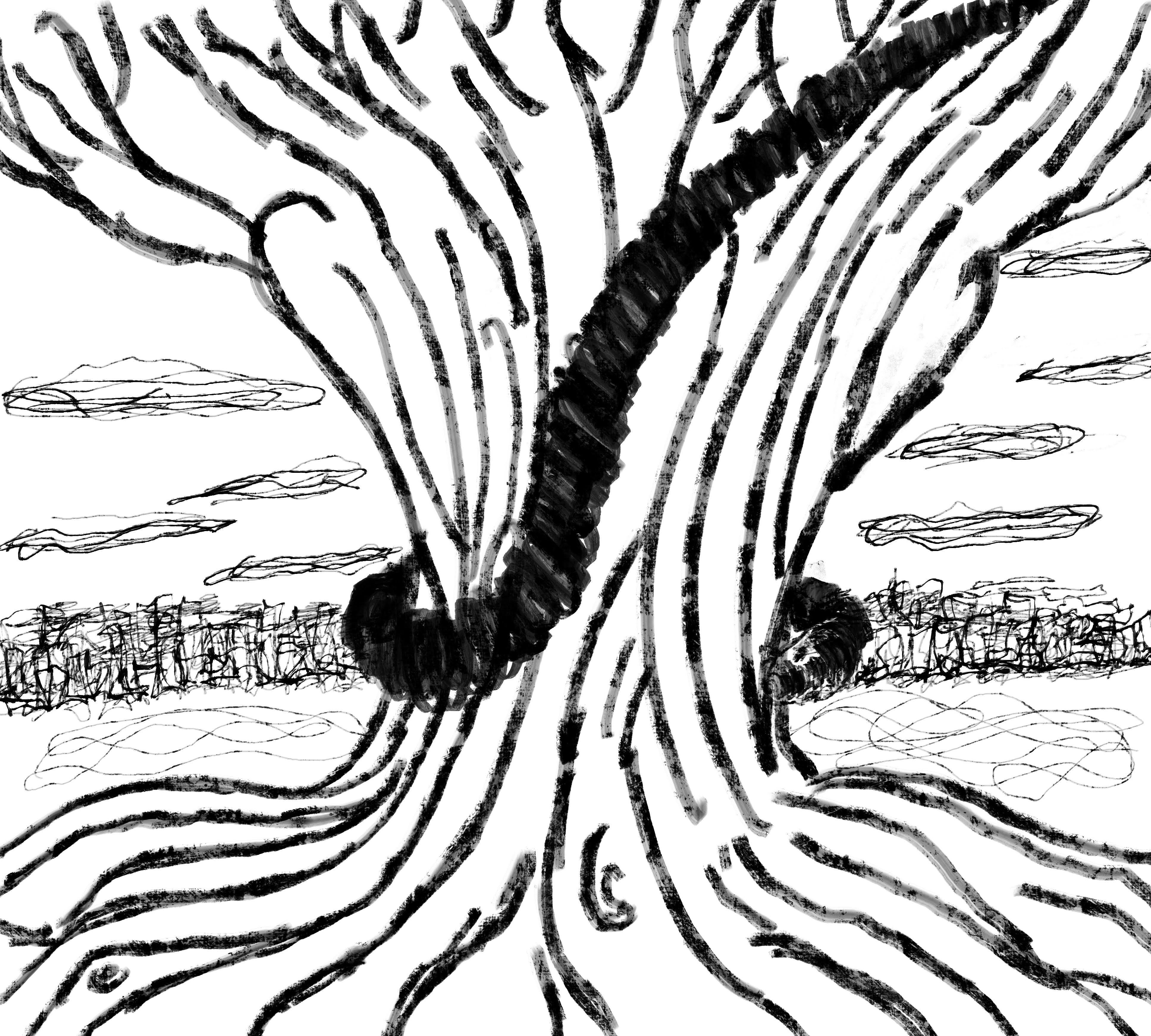
The sun always felt hotter on days like this. Those days its rays bite into the skin. Grandma had called it a bad omen. It had felt like this the day his brother died. It had felt like this the day the house was broken into, where the fire that followed took what little hadn’t been stolen. It had felt like this on the day of his conviction. The sun may very well have been gnawing at his roots since the day he was born. But today felt different.
The ocean air in his lungs and the engine’s low murmur gave this moment an unfamiliar hue. Though the sea had always been his neighbor, the boy had never sailed before. His closest encounter with the nautical was getting banned from the aquarium for fighting near the starfish exhibit. Naturally, the boy had lied about his swimming aptitude when he volunteered for this program. He regretted that now as he gazed into the deep blue.
As he watched his reflection shape and shift in the sea, the boy imagined himself drowning, the waves puppeting his lifeless body. He wasn’t worried about his corpse being lost to the ocean, however. The orange jumpsuit he wore would help him stand out among the waves and flotsam. As the morbid image appeared in his mind, he couldn’t help but crack a nervous grin.
“Thinking of taking dip, Folsom?” It took him a moment to process the guard’s words over the drone of the boat engine. He gave a fake smile and a chuckle, the latter rendered inaudible by the noise. The guard was well-meaning, doing his best to keep the mood light. The boy appreciated the attempt, though he hadn’t bothered to learn the man’s name, nor the names of the other inmates, for that matter. If all went well, he’d never have to see any of them again after this. Though the same would be true if things went poorly.
‘Folsom’ as the guard had called him, was not the boy’s name, but the name of the prison he was from. Inmates in the program were often referred to by the name of their facility rather than their actual name. The boy inferred it had something to do with the program’s high attrition rate. Learning the names of dead men was inefficient.
There were three other inmates on the boat with the boy. Tucson, Atwater and Upstate. Tucson was a large pale man, almost as wide as he was tall. His movements were sharp and abrupt, as if he were constantly fighting to control his own body. The giant of a man was serving ten years for aggravated assault with a deadly weapon and first-degree attempted murder. Despite the charges, from what little conversation they’d had, he seemed reasonable enough.
This wasn’t all that surprising, since all prisoners who applied to the program had to pass a psychological evaluation. Anyone whose profile was found to be ‘unstable,’ ‘dangerous,’ or too antisocial was ineligible. Serial killers and most sex offenders were also excluded from the program, along with anyone on death row. Oddly enough, people serving life sentences were eligible for the program. The boy had asked what distinguished them from death row inmates during his evaluation, but he wasn’t given a straight answer.
Among the three other prisoners on the boat, Atwater was by far the friendliest. The banter between the ship captain and the jovial inmate could be heard throughout the vessel. The boy wasn’t entirely clear on the nature of Atwater’s crime or conviction. The man was serving five years; something to do with financial crime, though the boy didn’t really understand it.
A five-year sentence seemed to be on the shorter side for the type of person who applied to this project. The boy felt that five years should have been nothing to a man like Atwater. He was on the far side of fifty, he’d already lived a life, seen the world. What was five years lost time to some like him? Certainly not nothing, but was it really worth risking your life in a place like this? The boy didn’t think so.
If he were only going to be locked up for five years, the boy would have gladly served his time. But the fifteen years he was facing, that was too much. Felony theft, assault, and battery. He’d be 34 by the time he got out. The boy had known people like that. Men imprisoned and released to discover the world had moved on without them. The boy imagined that to be what Hell was like. Subtle. Suffocating. The type of pain designed to drive one mad. And if you had the misfortune of staying sane, of persevering through it all, what did it get you but more suffering? Maybe a strong will was its own form of Hell too.
The boy had no intention of finding out one way or another. He’d volunteered for this project on the day it was announced, with every intention of using it to gain his freedom. However, it wasn’t until six months into the program that the boy was selected. The optimist in him wanted to believe it was because they finally realized his potential to aid in the mission. But the realist in him, having seen the few other Folsom inmates who had returned mangled, maimed and mad, knew the truth. The government was running out of bodies fast, and the men on this boat were at the bottom of the barrel.
No one made this truth more apparent than the boat’s fourth and final prisoner, Upstate. A black man with no outstanding traits or features. He was the only prisoner the boy had seen in the program whose jumpsuit was black--the color reserved for uniquely dangerous inmates. He should have been ineligible for the program and yet there he stood. There was also something strange about the way the guards interacted with him. They didn’t seem to be scared of him, so much as they were scared to been seen around him. The guards who escorted him onto the boat seemed ashamed to be there. Being around him seemed to serve as some sort of punishment.
Prisoners also avoided Upstate. After being selected for the program, the boy had even been warned that talking with Upstate prior to their assignment could result in punishment. Avoiding him wasn’t difficult, since he made a conscious effort to keep to himself. From the time they’d been grouped together, the boy hadn’t heard Upstate speak once. He watched the man now, as he looked through his rucksack, checking and reorganizing his equipment. A final once over as the boat neared the shore.
“Everybody out!” A guard shouted as the boat made landfall, and one-by-one the inmates obeyed. Upstate, Atwater, Tucson and Fulsom all stood on the beach, looking at the faint spec on the horizon that was California. “We’ll know when you’re finished installing the cameras. Meet back here when you’re done and we’ll take you back to the mainland.”
The task sounded simple. It seemed simple too. Cartography and land surveying in exchange for a reduced sentence. But this job wasn’t simple and it certainly wasn’t safe. The boy understood this on an intellectual level. He’d read the briefs, heard the stories, remembered the news coverage from when these islands first appeared. He understood that. But full comprehension, experiential understanding of this fact only came as he watched what happened to the boat.
The moment was quick. Too fast to react to. But just slow enough that the boy could see and comprehend everything that was happening in excruciating detail. The boat hadn’t even attempted to leave the island before it was seized by something beneath the waves. A deep whirring overpowered the sound and strength of the engine along with the cries of the crew. The hull of the boat withstood the pressure for a brief moment before it crumpled in on itself. The vessel, which had been turned inside out in a matter of seconds, let out a metallic groan as it was stolen by a large silhouette in the waves.
All the prisoners could do was look on as the midday sun, fangs sharp and mouth full, laughed and continued to consume them.